
Omnichannel sponsorship activation is something Lumency talks about frequently, in our content and, more importantly, in day-to-day work with brand owners. It comes up when discussing activation ratio ranges, the obligation to add to the fan experience in order to be recognized and rewarded, and the role of zero- and first-party data in modern activation design. The pattern that shows up consistently is this: inside most organizations, the issue is not confusion about what activation is, but a lack of commitment to fully optimizing it across the channels already at their disposal.
Sponsorships are not campaigns. They are strategic assets. Treating them as campaigns keeps activation tethered to event windows and executional calendars, rather than tying it to how the brand creates value with fans and customers over time. Sponsorship is campaigning, a platform for ongoing storytelling and experience design that should sit alongside other core brand and commercial levers. Proper activation is
omnichannel by definition: embedded into how the brand shows up, not bolted on around match day or race weekend.
A useful way to visualize this is to put the sponsorship at the hub of an activation wheel, with the organization’s connection channels radiating outward as spokes.
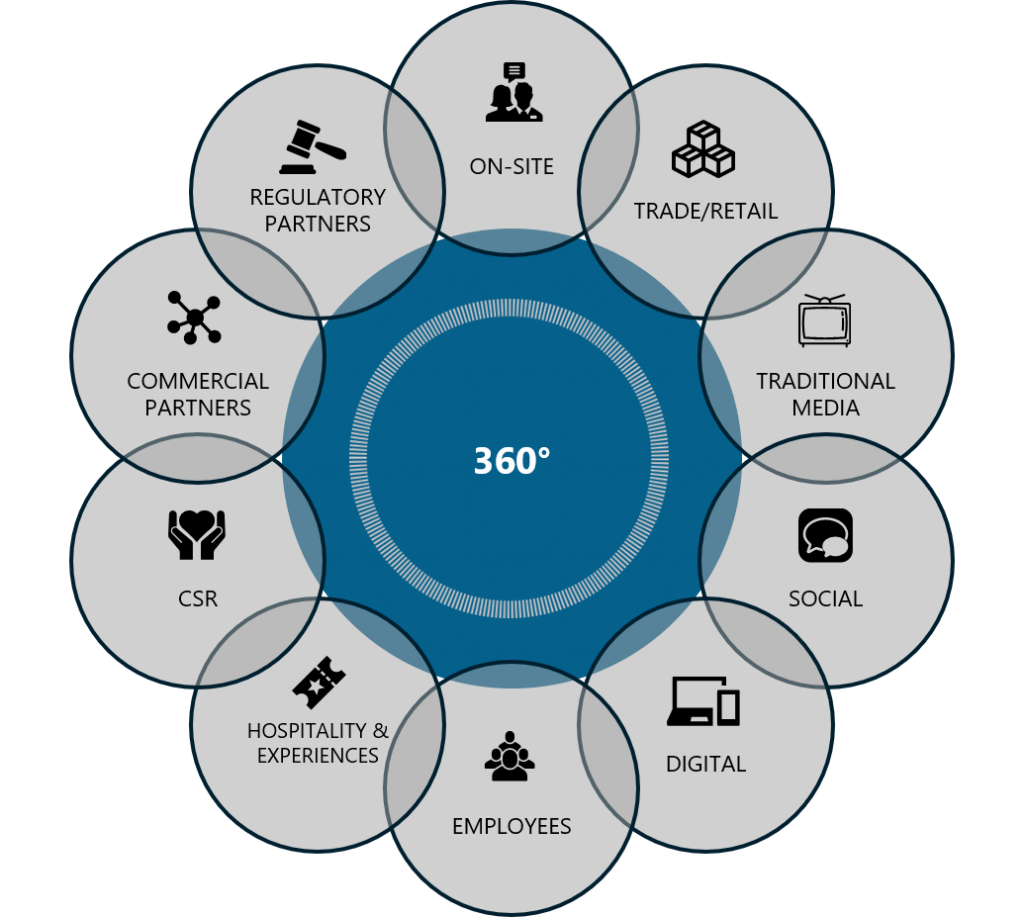
The visual in this article does most of the work, but the principle is straightforward: the value of the asset is unlocked when sponsorship rights are deliberately carried into the channels the organization already uses to reach consumers, customers, partners, employees, and other stakeholders.
The role of those responsible for sponsorship is to ensure that happens. That means working across internal and external stakeholders to deploy rights into as many relevant touchpoints as make sense for the asset. This is where the real gap typically sits. Most organizations have the channels, the rights, and the ability to execute. What they often lack is the discipline and governance to insist that sponsorship shows up across the wheel, proportionate to its role and investment level, rather than defaulting to a narrow set of familiar, event-centric executions.
When organizations make that commitment, the performance upside is tangible. Content that puts the property out front, with the brand drafting behind it, routinely outperforms standard engagement benchmarks. Primary and secondary packaging that integrates property IP drives stronger shelf impact and improved sell-through. Above-the-line work that meaningfully weaves the property into the narrative delivers higher recall than creative where rights are treated as a logo at the end. Employees report higher pride and connection when they are invited into sponsorship in authentic ways, rather than simply being shown a recap deck.
All of this still has to start with the fan. Omnichannel activation should add to the fan experience rather than interrupt it — solving real frictions or enhancing real moments so the brand is recognized and rewarded. Within that, zero- and first-party data are not a separate initiative; they are part of what good activation looks like. Smart sponsors design on-site, digital, CRM, and retail activations to earn data naturally through the experience, then use that data to inform creative, audience strategy, and optimization across the same channels.
Redefining what “good” activation looks like inside the organization means moving beyond a checklist of hospitality, visibility, and a few social posts. It means holding sponsorship to an omnichannel standard — where the asset is visible in the activation wheel and traceable into the performance of core brand and commercial channels. This does not require more sponsorships. It requires better use of the ones already in the portfolio, and a willingness to treat sponsorship as connective tissue across the organization, not decoration on top of it. The brands that close that commitment gap are the ones that consistently extract more value from the same rights.