Sponsorship has the ability to address multiple objectives in the marketing and business funnel simultaneously. It can build awareness and consideration, influence preference and purchase intent, and even deliver internal benefits like employee engagement, trade motivation, or regulatory goodwill. Few marketing investments are this versatile when designed and managed strategically.
It’s also a long-game form of marketing pressure. Unlike campaign-based advertising, which creates short bursts of attention, sponsorship builds association and equity through sustained relevance within a community. The impact compounds over time as audiences come to recognize, credit, and ultimately advocate for the brands that consistently show up and add value to their experience.
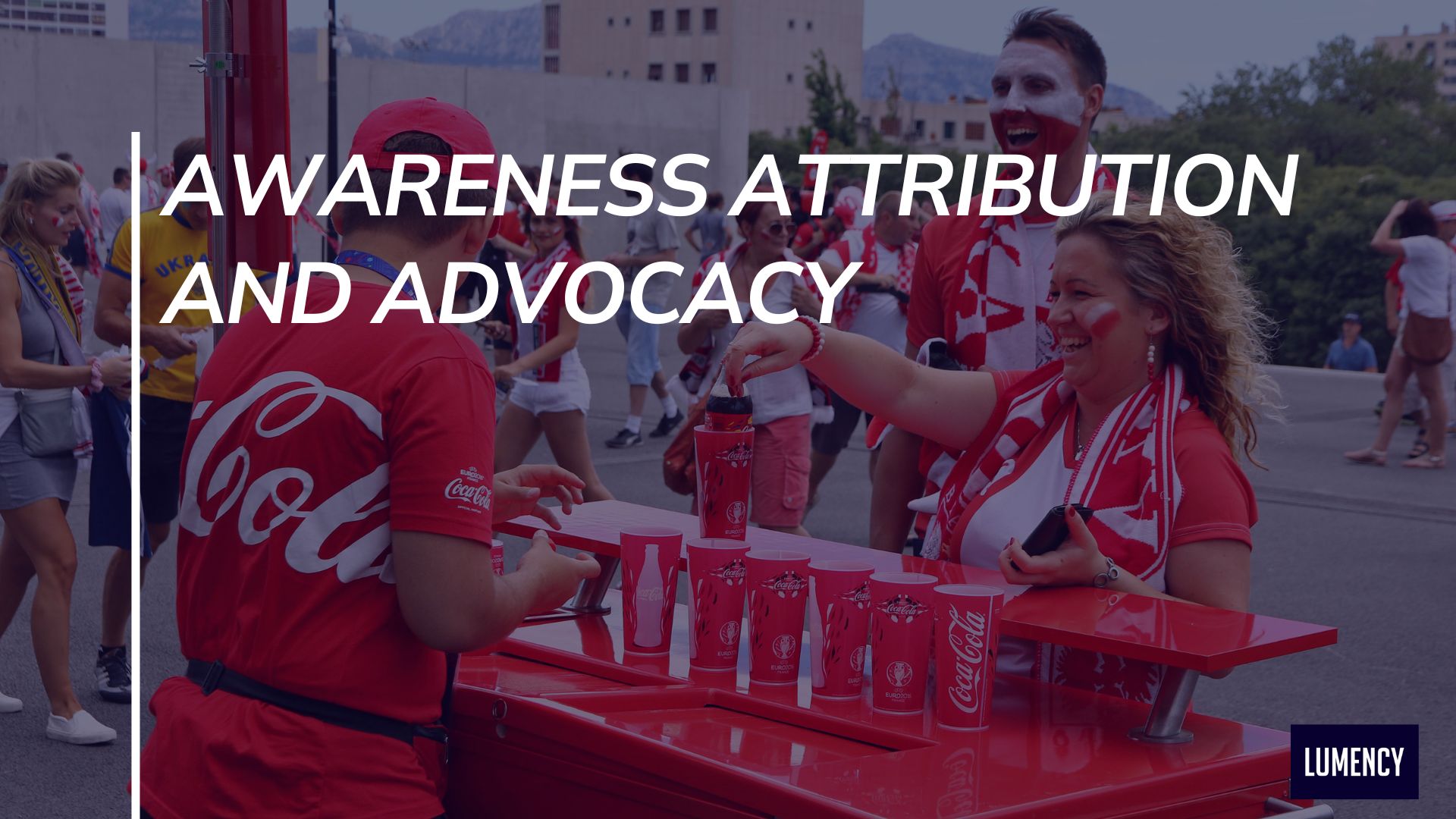
To frame that progression, we use what we call the Three A’s: Awareness, Attribution, and Advocacy. They’re the core building blocks of effective sponsorship design and measurement, and the
clearest way to understand where a brand is today and how to move it forward.
Awareness is the foundation. In the early stages of a new sponsorship, success means that the community around the property simply knows you’re there. It sounds obvious, but it’s the critical first milestone in any sponsorship. For most brands, the first year or two should focus on building visibility and familiarity, reaching a baseline of roughly 11% unaided awareness among fans or participants. The emphasis here is on visibility assets: in-venue, on broadcast, and through digital and social extensions that build presence quickly.
Attribution comes next. This is when audiences start to give your brand credit for enhancing their experience or contributing meaningfully to the property. When attribution grows, brand relevance grows with it. Years two and three typically see unaided awareness climbing into the 30s, 32% on average, and corresponding lifts in brand health and impact scores among fans versus non-fans. At this stage, asset weighting should shift toward more experiential platforms: live, social, digital, and CRM that enable audiences to feel the brand’s contribution firsthand.
Advocacy represents maturity. It’s when awareness and attribution have compounded into genuine brand equity. Fans not only recognize and credit your brand They prefer it. They’ll recommend it, overrule a salesperson, even pay a premium because your brand supports their team, event, or festival. In mature programs, unaided awareness often exceeds 70%, and brand health scores can land 40% higher than among non-fans.
This evolution isn’t strictly linear for every brand or property, and the Three A’s aren’t sequential boxes to check. A strong sponsorship program maintains activity across all three, adjusting weight and focus as the relationship matures. Even long-tenured sponsors continue to invest in visibility assets. They simply place more emphasis on experiences and storytelling that build deeper connection. The most effective brand owners calibrate their objectives and asset mix to where they sit on the Awareness–Attribution–Advocacy curve. They also recognize that sponsorship’s influence extends beyond consumer marketing, supporting employee engagement, customer and trade relationships, and reputation with regulators or policymakers, along with other non-consumer focused objectives.
For organizations ready to move from visibility to value, the question isn’t whether sponsorship works—it’s how to structure and measure it to keep performing better over time.
That’s where disciplined evaluation matters. Understanding how a sponsorship is performing against the right benchmarks—what’s working, what’s lagging, and where to optimize next—is essential to unlocking compounding returns. Lumency’s Sponsorship Activation Scorecard™ was designed for exactly that purpose: to help brand owners quantify progress across Awareness, Attribution, and Advocacy, and to identify the levers that will drive greater impact year after year.