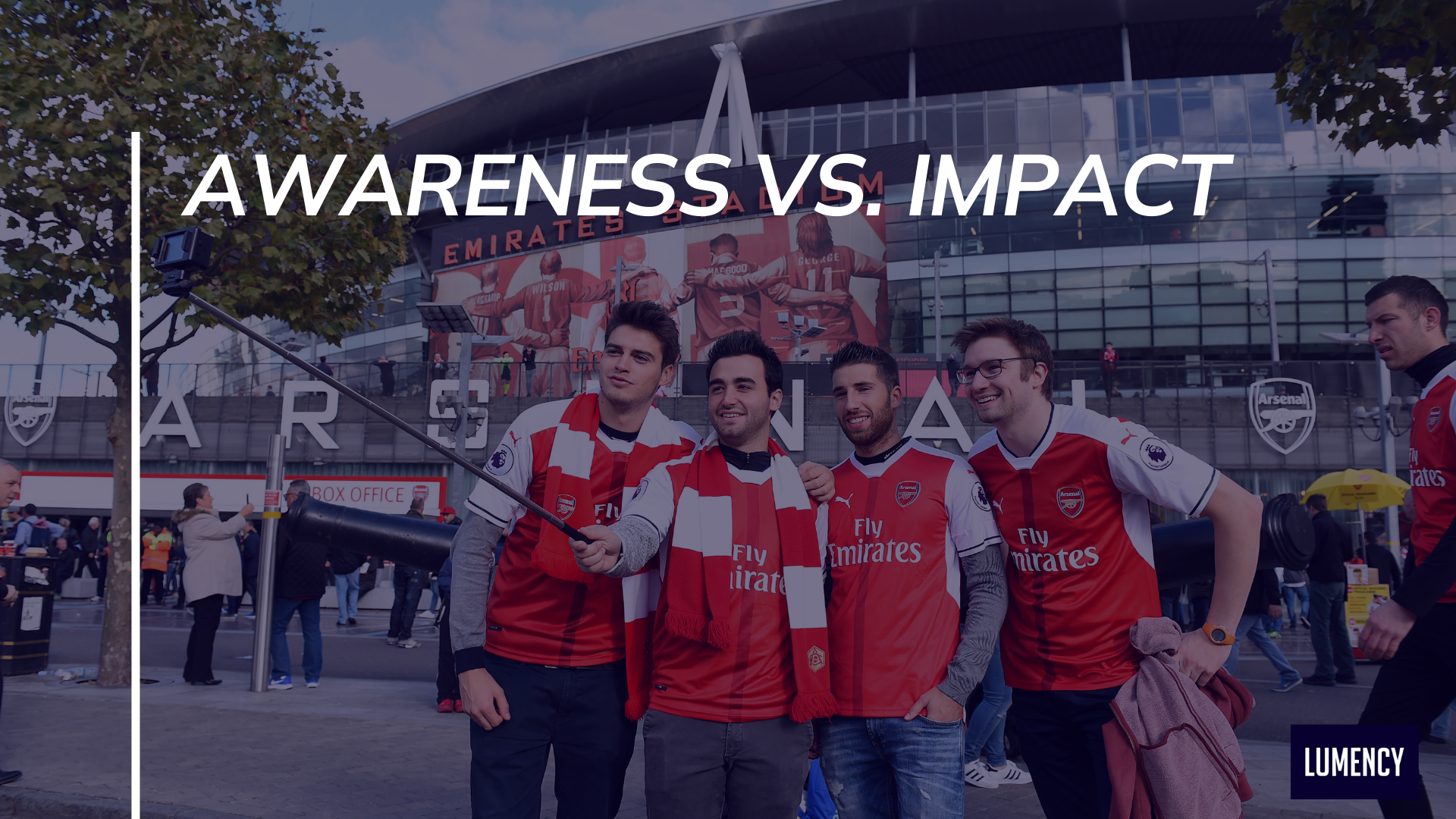
Venue naming rights are among the most visible assets in sponsorship.
When they work, they can be powerful. A brand’s name becomes part of how people reference a building, a district, or even a city landmark. Over time, that association can translate into strong mental availability and brand familiarity.
But the conditions where naming rights truly make strategic sense are narrower than many organizations assume. Outside those conditions, the economics and risks often mean they should not be in the decision set at all.
The three conditions where naming rights work
There are three situations where the investment can be justified.
1. Mental availability is a real lever
In highly competitive, low-involvement categories, being top of mind matters. When consumers make quick decisions between largely
interchangeable options, familiarity and recall can influence market share.
This dynamic shows up in categories like retail banking, telecom, insurance, and other everyday services where brands compete for mental availability as much as functional differentiation.
In those environments, venue naming rights can function as a long-term awareness engine. The repeated exposure that comes from everyday language, media coverage, and navigation reinforces the brand’s presence in the market.
That effect strengthens when the naming rights are supported by consistent activation around the property.
2. You have a market entry or reframing problem
Naming rights can also make sense when a brand is entering a new geography or supporting a major repositioning.
Entering a market usually comes with a familiarity and trust gap. A venue naming partnership can help establish credibility by placing the brand in a highly visible and culturally relevant local asset. For example, when BMO expanded its presence in the US following the Bank of the West acquisition, the naming partnership with BMO Stadium in Los Angeles provided an immediate, high-visibility platform in one of its key growth markets.
Over time, the repeated exposure that comes from media coverage, navigation, ticketing, and everyday language helps build recognition in the market.
It is an expensive lever, but in the right circumstances it can provide a strong platform for moving a brand from unknown to familiar.
3. You are, or want to be, a civic anchor
In some cases, the logic is less about consumers and more about place.
Large employers, major taxpayers, or organizations with deep local roots may benefit from visibly embedding themselves in the fabric of a city. Naming rights can signal long-term commitment and strengthen relationships with communities, regulators, and local stakeholders.
For example, Allianz’s partnership at Allianz Arena reflects the company’s long-standing presence in Munich as a global financial services institution headquartered in the city.
In those situations, the asset functions as both a marketing platform and a statement of civic presence.
If you cannot honestly tick at least one of these conditions, naming rights are almost certainly the wrong tool.
What the data shows when those conditions are met
When the strategic fit is right, naming rights almost always win on awareness.
Among the sponsor stack tied to a venue, the naming partner typically dominates unaided recall. The brand becomes the shorthand for the building itself.
But awareness alone does not guarantee impact.
Without meaningful activation layered on top of the rights fee, naming rights almost always underperform on deeper outcomes such as consideration, preference, or purchase intent when compared with smaller, more targeted sponsorships.
These are also slow-burn assets. Naming rights agreements typically run for a decade or more. It can take up to three years for a new venue name to become fully established in unaided recall, and about as long for the previous name to fade from memory.
There is also downside risk. When the brand fit is weak or the deal feels overly commercial, fan sentiment can turn negative. Many supporters view venues as belonging to the team and the community around it, not to the brand paying to put its name on the building.
Why naming rights usually do not make sense
For most brands, one or more key conditions are missing.
The category may not be driven by familiarity and quick recall. The brand may not be solving a real market entry or repositioning problem. It may not have the civic presence that makes the signal valuable.
Just as important, many organizations underestimate what it takes to extract value from the asset. The rights fee alone rarely drives results. Impact comes from the activation investment and the rights mix that support the platform.
Without those elements, the result is often a very expensive long-term asset that delivers recognition but limited business impact, with significant opportunity cost compared with a more flexible mix of sponsorship and media.
A simple test for marketers and procurement
Venue naming rights should start from a position of discipline.
If the investment is not helping you win in a familiarity-driven category, solve a real market entry or repositioning challenge, or reinforce a genuine civic presence, it is unlikely to behave like a strategic platform.
And if the organization is not prepared to fund activation beyond the rights fee, the impact will almost certainly be limited.
In those cases, what you are buying is visibility rather than meaningful business advantage.
The more effective approach is to start with “no” and allow clearly met conditions, supported by a credible activation plan, to pull the decision toward “yes.”