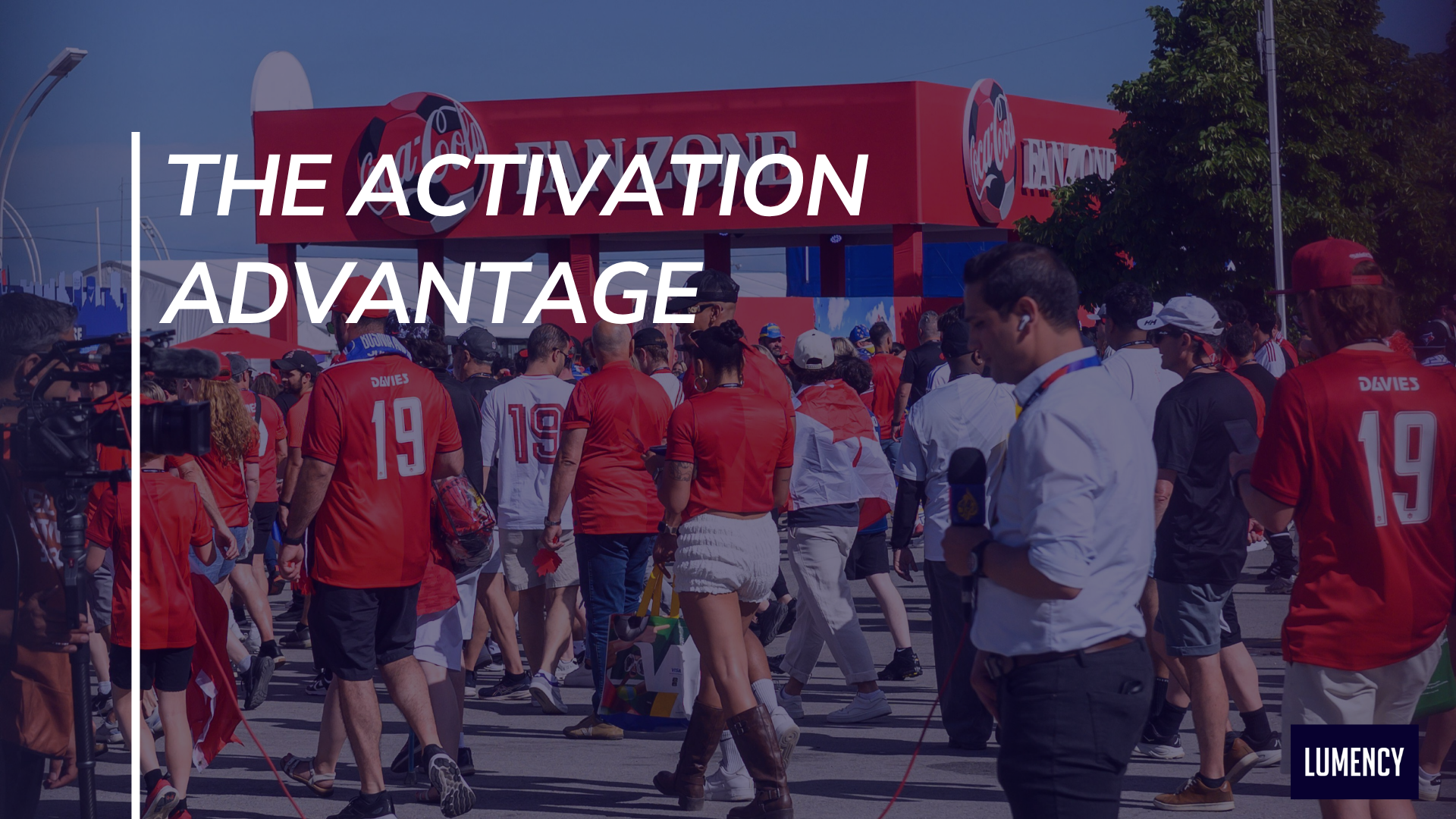
Activated sponsorships outperform under-activated sponsorships.
The difference is not marginal. It is often the difference between a sponsorship that meaningfully influences consumer behaviour and one that struggles to justify its investment.
This is not a discussion about whether activation matters. Sponsorship practitioners accept that it does.
The more important question is how much it matters.
The answer is visible across consumer research, portfolio performance, and brand owner behaviour. Sponsorships that are actively and effectively brought to life consistently outperform those that are not. The performance gap shows up in consideration, brand opinion, competitive differentiation, and commercial outcomes.
The property matters.
The audience matters.
The rights package matters.
But once a sponsorship is acquired, activation becomes the most significant determinant of the return a brand owner ultimately receives.
What activation actually means
Activation is not an event.
It is not a social post.
It is not a hospitality program.
It is not a logo on a jersey.
Activation is the process of translating sponsorship rights into business outcomes.
It is how a brand owner uses the audiences, assets, associations, content opportunities, retail programs, employee initiatives, digital channels, experiences, and commercial relationships connected to a sponsorship to achieve a defined objective.
The rights fee creates access.
Activation determines what a brand owner does with that access.
A sponsorship does not create value simply because a contract exists. Value is created through execution.
The industry gap
Most brand owners understand that activation influences performance.
The challenge is the gap between what organizations say is important and where they invest.
Research conducted by the World Federation of Advertisers and Lumency found that seventy-six percent of global brand owners identify measuring and demonstrating ROI as the single biggest challenge facing sponsorship.
Yet, on average, less than one percent of sponsorship budgets are allocated to measurement.
A similar disconnect appears in activation investment.
On average, global brand owners invest approximately seventy-six cents in activation for every dollar spent on sponsorship rights. That figure has declined from eighty-one cents just two years earlier.
At the same time, sponsorship investments continue to grow in both scale and complexity.
Tracking discipline is improving. In 2023, forty-one percent of surveyed brand owners could not accurately report what they spent on activation. By 2025, that figure had fallen to twenty-two percent.
Even so, the broader pattern remains.
Organizations consistently identify performance as a priority while underinvesting in the activities most closely tied to performance.
The consequence is substantial variation in sponsorship effectiveness.
Research from McKinsey identified a tenfold difference in ROI between the highest and lowest-performing sponsorships within the same portfolios.
Properties differ.
Objectives differ.
Markets differ.
Yet activation quality remains one of the most significant variables separating stronger-performing sponsorships from weaker-performing ones.
What happens when brand owners actually activate
Consumer research provides some of the clearest evidence of the impact activation can have.
A recent sponsorship effectiveness study for a Lumency client compared consumers aware of sponsorship activations with those who were not.
The findings were significant.
Among consumers aware of the brand owner’s activations, purchase consideration increased by as much as twenty-five percentage points.
By comparison, consumers aware of the sponsorship alone typically demonstrated consideration lifts of approximately eight points.
Brand opinion followed a similar pattern.
Consumers aware of sponsorship activations reported lifts of up to twenty-three points in brand opinion.
Consumers aware of the sponsorship alone reported lifts closer to eighteen points.
Sponsorship awareness creates impact.
Activation creates outsized impact.
The strongest finding, however, was competitive.
Among consumers unaware of the sponsorship and its activations, the sponsor’s consideration advantage versus competitors was often neutral or negative.
Among consumers aware of the activations, that advantage increased by as much as thirty points in the sponsor’s favour.
Same property.
Same rights fee.
Different outcome.
The implication
The rights fee is not where sponsorship performance is determined.
It is where sponsorship performance begins.
Too often, sponsorship decisions focus on acquisition.
A stronger question than “Is this property worth the asking price?” is often:
“Do we have the activation plan, budget, capabilities, and commitment required to fully capitalize on this opportunity?”
Without activation, sponsorship value remains largely unrealized.
The property may still generate awareness.
The association may still be recognized.
The logo may still be seen.
But much of the value available through the partnership remains untapped.
Under-activated sponsorships do not simply underperform against their own potential.
They underperform against activated competitors pursuing the same audiences.
The rights to results
Sponsorship leaders spend enormous effort evaluating opportunities before they are acquired.
The evidence suggests greater attention should be paid to how those opportunities will be activated after they are acquired.
Because sponsorship value is not realized when rights are purchased.
It is realized when those rights are put to work.